The Ultra-Distance Insights with "Running with Simon"
Interview with: Simon Guérard
Ultra runner and YouTuber Simon shares key strategies on sleep, logistics and trail wisdom for ultra races.
1. Hi Simon, to kick things off, could you introduce yourself and share a bit about your journey into ultra running?
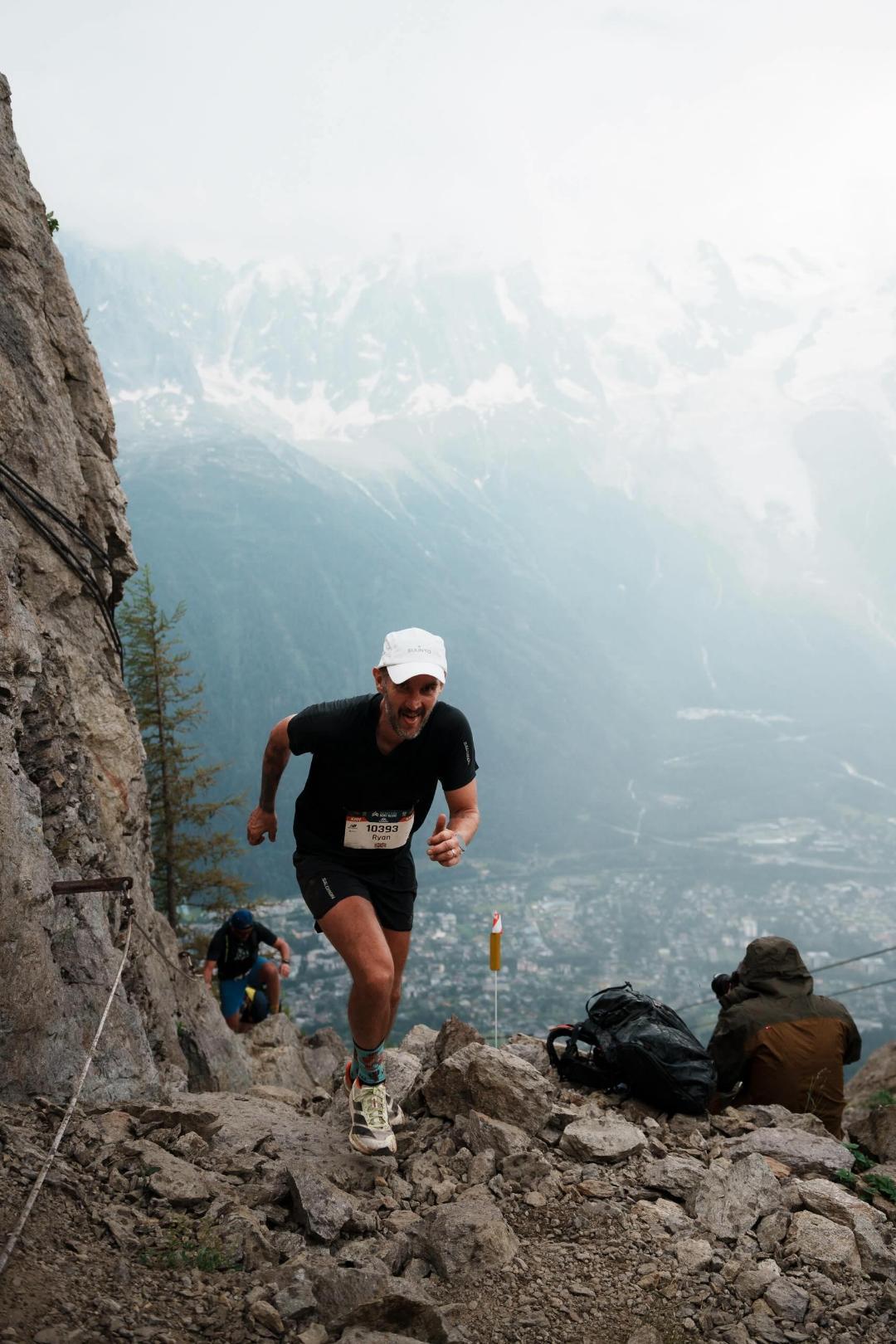
Hi - Simon here from "Running with Simon" on Youtube! I'm an average guy with an average job, but come the weekend and you will find me on trails either hiking or running ultra races. I'm not an elite runner, despite having a PR at 100 miler of 16h 18min and now hitting my 40s, I've decided to focus on having as many cool adventures as possible rather than speed. I focus on mountain 100 and 200 milers and now have 68 finishes at 100 miles or longer.
2. Moving up to 100 milers and 200+ mile races shifts the focus heavily to logistics, sleep management, and fueling. What is your strategy for staying fueled when your stomach stops cooperating, and how do you handle sleep deprivation over multiple days?
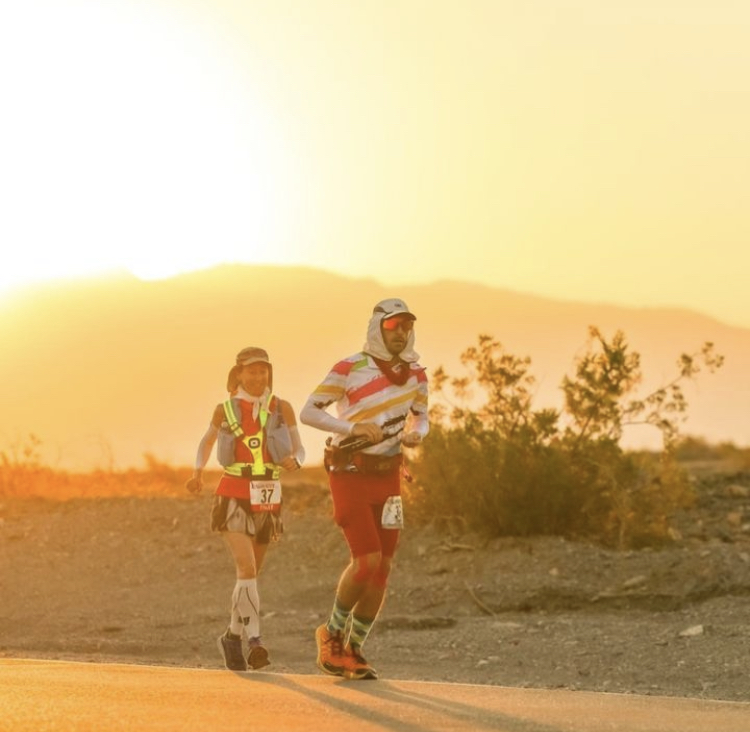
My true background is in hiking and backpacking rather than pure athletics and/or running, so the adaptation from 100 miles to 200 miles was seemless. I think the two biggest difference at those distance is that although 200 miles is (obviously) longer than 100 miles, the race itself is less "physical" and more about sustainability and mental resilience. Whereas you can "push" through issues at 100 miles or less, you have to be smart about taking care of yourself for "tomorrow" on those longer races. As mentioned, that includes logistics, sleep management, and fueling. For logistics, you need to know what you will need, and when. There is nothing worse than not having an extra pair of socks, leading to blisters for the remaining 100-150 miles. Crewing and pacing is much more challenging too, but also more beneficial especially for rugged races where sleeping station are deficient. Speaking of sleep - I'm a strong advocate for sleeping regularly and sufficiently. Unless you plan to win the race, taking 1-2hr per night - ideally right before sunset - can make a huge difference. You feel better, think clearer, and can move faster. From my experience, I typically gain and pass people sticking to minimal sleep after the second night where they start to struggle. With a good sleep pattern, you can be somewhat constant from day 2 onwards (I've raced up to 130 hours and could have gone much longer at more or less the same pace). Finally when it comes to fueling, because of the slower pace, you don't need as many calories per hour. Which makes it a little easier to rely on solid food, which itself is milder for your stomach.
3. For runners looking to step up and attempt their very first 100-mile or 200+ mile race, what are the most crucial pieces of advice or common mistakes they should avoid?
Beyond what I've mentioned above, I think everyone would benefit from multi-day backpacking. You become "trail smart" about what is needed and dealing with any situation. Footcare is an obvious one - you can finish 200 miles without any blisters (and should aim for this). Understanding when to change socks, apply lube or tape, etc. There is no substitute to experience sadly - we can give tips to guide newer runners (which is the goal of my channel), but ultimately, you have to get out there, and find what works for you.
4. Out of all your extreme races from Tor des Géants to Monster 300 — what was your best race experience, and which one was your absolute hardest, and why?
I had so many great experiences - it's always hard to choose my favorite. I think what often makes a race special is a combination of epic course and views, but also the people you meet along the way. Tor des Geants is probably my best experience - being in the Alps is quite special for me. But also I was lucky with the people I met, and it felt unique to have the contrast of high mountain passes, and small Italian villages. That we had bad weather with massive rain storms and eventually snow made it all the more memorable. It's also probably the hardest race I've ever done. Beyond that, some honorable mention would include Ultra Tour Monte Rosa (for the same reasons), Zion Ultras, and HURT 100 in Haiwaii. Obviously all of these are featured movies on my Youtube channel.
5. You experienced a DNF at Bigfoot 200 due to an injury, but came back to finish it. What did that process teach you about resilience and managing race-day expectations?
Bigfoot was my first (and only) DNF and it teaches you a lot. Just to give the background - I was racing Bigfoot with a nagging footdrop issue / injury. 10 miles into the race, I was rolling my ankle sporadically, and eventually sprained it barely 0.1 miles from the first aid station. I've decided not to DNF there - it was still early and difficult to tell how bad it was. Unfortunately, the next segment was about 25 miles with a lot of rocky trail. That was very taxing for my ankle and it became clear I had to stop. I also didn't want to make it worse and prolong healing / recovery as we had other plans coming up (e.g., a hiking trip in the Alps). Something I never do is take any long race for granted. Sure, some are more challenging than others - but you simply never know what can happen. My DNF at Bigfoot could have been any other race. I have no regret about dropping - it was clearly the right decision. I've had other situations before which could have easily resulted in DNF but I decided to keep pushing. I can take the pain and adversity, but where I draw the line is my health, and potentially making things worse. For example, I've completed 2x 100 miler with freshly broken ribs (bike crashes both time), broken toe, stomach flu (losing 15lbs), etc. When you decide to DNF, you have to understand that this is a one-way decision, and you have to be OK with it. The other injuries when I didn't DNF, I know it would have hunted me later.
6. Ultra running is intense, but you often share adventures with your partner Nora. How crucial is having that support system when navigating the dark moments of a race?
I do about half of my races solo - so it's not essential. But sharing miles is our happy place, so I'm very grateful for her support when it's possible. We also try to have a lot of adventure beside racing when we travel. For example, we were just in the Alps to both hike Tour du Mont Blanc, and for me to run Ultra Tour Monte Rosa. Great time!
7. You create a ton of educational content for over 45,000 followers. What is the core "trail wisdom" you hope people take away from your channel?
I want people to have their own adventure and realize that they can achieve incredible things. If I can do it, then surely you can too!
8. With major races like Cocodona 250, Tahoe, and Moab 240 on your radar, what is the next big goal or dream project on your horizon?
I had a great time running these longer race - but it's been challengnig to do so many in the same year. Not so much the running, but rather, justifying the travel time and cost. And the time away from the office - combining work with those trips makes it a bit too much. So I think I will refocus the upcoming season on a few longer race - maybe Swiss Peaks 380, along with several mountain 100 milers, which are my original passion.
Keep following the journey
Follow Simon Guérard on Instagram
@runningwithsimon
Don't miss the next interview.
New stories, interviews and motivation from the road and trail — delivered straight to your inbox. No noise, just the good miles.