Michael’s 3,000 km Journey to Break Mental Health Barrier
Interview with: Michael Larter
How Michael Larter is using extreme running to fund free therapy for young people.
1.Hi Mike. Could you introduce yourself and tell us a bit about your life background?
My name is Michael Larter, originally from the South Coast of South Africa.
2.Can you share a bit about the personal journey that led you to found the Aimee Howard Foundation and turn your running into a tool for mental health awareness?
I lost my girlfriend Aimee in 2017 to suicide. She was not able to get the therapy she needed because of financial barriers. I started the foundation to help young adults and teens that are in her position. Every young person should be able to get therapy if they need it.
A few years ago I saw the Hardest Geezer running the length of Africa, I then went down a rabbit hole of runners running for charity doing the craziest challenges you could imagine and I thought “why not me?” Which led me to making a video talking about it which led to a huge amount of support from all around the world to make this dream a reality.
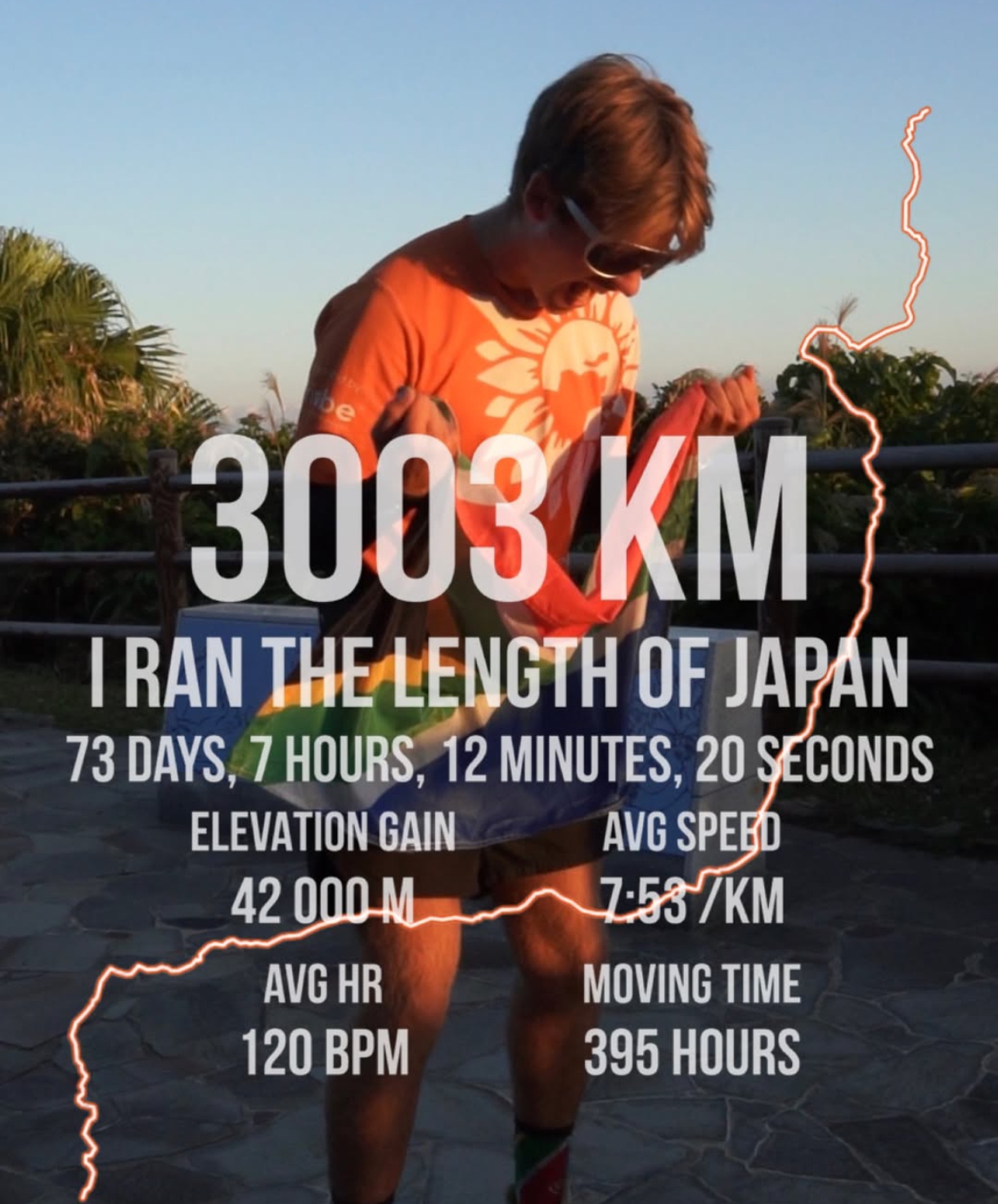
3.You’ve tackled some insane distances: running 772 km from Cape Town to Namibia, and pushing a baby stroller 3,003 km solo across Japan. What were the biggest mental and physical challenges on each of these journeys?
When I did the Cape Town to Namibia run my body wasn’t truly ready for such a challenge. I was in a huge amount of pain for the majority of it. It was my mind that kept me going. Learning to cope with that much pain took a lot out of me but I truly learnt how strong I am from it.
Japan was different. The biggest challenge was just supporting myself the whole way. Making sure I was eating enough in the beginning was a real challenge. My body had not adapted to daily marathons and I would feel like I was dying at the end of the day. But after around the 2 week mark things changed. I felt stronger and coped really well after that.
A few weeks in I chafed really badly and it seemed like it was going to get infected but luckily I took it quite seriously and was able to heal it while still running. Coping with the idea that you’ve got 3000km ahead of you was a huge mental challenge. It was truly terrifying.
But I have a quote that I love.
If you never let yourself be scared you never give yourself the opportunity to be brave.
4.Pushing a converted stroller full of gear across Japan isn't standard running prep! What were your non-negotiable gear items and daily fueling strategies to survive those miles?
I would say my 2 Litre water bladder was essential, I would fill it up every morning from the bathroom sink wherever I was staying.
Spare tire tubes because Japan is covered in chestnut trees and the burrs they drop are spiked and would pop my tires every couple of days.
Japan has these jelly drinks (called ‘In’ that have vitamins and minerals and the one had 200 calories per pack. I’d slurp down between 5-10 of those a day, drink a Pepsi at midday to give me an extra push and eat a whole lotta junk food. I ate a lot of "famichiki" meaning “fried chicken” to keep protein up for recovery.
I’d also have a lot of McDonalds at the end of the day totaling nearly 2-3000 calories to name sure I’d wake up with energy to get me going. I ate a lot of rice balls, sushi where I could, Japanese breakfast buffets had me eating a lot of fish, miso soup and rice for breakfast which were better meals then what I’d do to my body the rest of the day!
5.When you're tens of hours into a grueling ultra or multi-day expedition, where does your mind go when the fatigue hits its peak?
When you’re in those situations and you’ve been running for hours you’re a bit in “survival mode” you don’t worry about anything other than running and fuelling yourself. I did think about it a lot while on my 73 days of running. I thought about what I wanted to do in the future, the next running projects, motivational speaking, run coaching, scaling my foundation to help as many people as possible. A lot of which I’ve worked on this whole year since the run.
6.How does completing these massive running projects translate into direct therapy access for teens and young adults through your foundation?
The runs are a way to get the world’s attention, to get people motivated to help fix the problem and to donate to the cause. The donations and awareness are the main way the projects help the foundation.
7.What are you hoping to achieve next with your future projects and the foundation and what message would you like to share with anyone currently struggling with their mental health?
I’m planning smaller projects in South Africa to build support from my home country before I go overseas again. I still want to run from LA to New York one day. The goal is to raise a huge amount of funds and get the foundation well known around South Africa.
I would like them to know “You are not alone in this, there are people all around the world who want to help. Please reach out.
Keep following the journey
Follow Michael Larter on Instagram
@michaeluncharted
Don't miss the next interview.
New stories, interviews and motivation from the road and trail — delivered straight to your inbox. No noise, just the good miles.