In the Jaws of Giants: How François D’Haene Reclaimed His Life at Tor des Géants
What drives a person to face 330 kilometers of wild Alps, 24,000 meters of elevation gain, and three days and nights without sleep? Comparing the Tor des Géants to the legendary UTMB is a complete misjudgment. Due to its technical terrain, brutal altitudes repeatedly crossing above 3,000 meters, and extreme sleep deprivation, this isn't just a race—it’s a raw mountain expedition disguised as a competition.
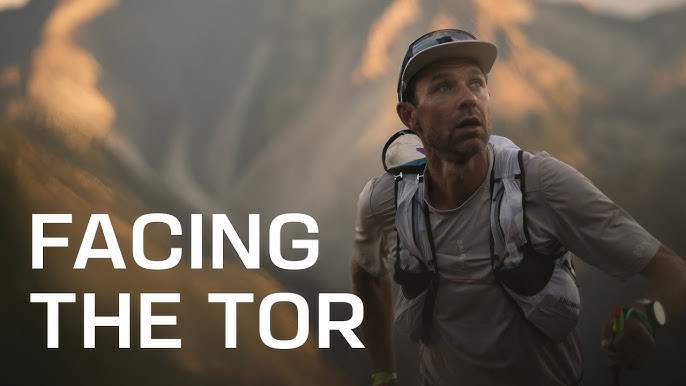
When legendary ultrarunner François D’Haene was asked how long he had been training for this kind of challenge, his answer was simple: “I don’t know. Twenty years.” And it is the absolute truth. The Tor does not forgive a lack of deep mountain experience. But for D’Haene, the September 2024 edition was about much more than just a trophy. It was a reclamation.
The Fall and the Doubt That Tears Inside
It all began in November 2022 during a paragliding flight in Beaufortain, France. A hard crash landing against the terrain left him with a catastrophic diagnosis: a triple fracture in his foot, thirteen screws, and two plates. The entire world of the multi-time ultra champion shattered in a single second. Months of grueling physical rehabilitation followed—learning to walk again, then jog, and eventually, run downhill.
Although he courageously returned to the trails, his body wasn't the same. His ankle couldn't fully bend, and the mechanical compensation triggered relentless back and knee pain. When he was forced to drop out (DNF) at the mythical Hardrock 100 in August 2024, doubt became unbearable. For the first time in his career, he faced the ultimate question: Is the mountain chapter of my life closing?
Day One: Befriending the Pain
At the starting line in Courmayeur, François had only one strategy—absolute patience. He refused to size up the competition or obsess over splits, choosing to focus entirely on his internal pacing.
The first 24 hours brought apocalyptic conditions: relentless humidity, rain, and dangerously slippery mud. His surgically repaired ankle was screaming in pain. Yet, after 147 kilometers and 14,000 meters of climbing, a mental shift occurred. When you have been moving through the mountains for an entire day and night, expecting nothing to hurt is an illusion. The pain stopped causing panic; it simply became standard information from the field.
The Note That Dimmed the Light
Then, at kilometer 268, the heaviest psychological blow landed. An exhausted D'Haene was handed a note by a spectator from a rival runner, Martin Perrier. It contained severe accusations of cheating, claiming that François was running with pacers—which is strictly banned—and threatened a public social media scandal. The note carried a stark ultimatum: “Drop out by midnight if you want to save face.”
The reality was entirely different; the alleged "pacers" were actually official videographers accredited by the race organization to document his journey. But in a state of profound fatigue, the false accusation completely drained him. He lost his drive, and the haunting question, “Why am I doing this?” began to consume him. In that dark moment, pure anger became the only fuel left to push his feet forward.
Brison Pass and the Predator Gear
By the final night, deep in the forest, sleep deprivation triggered vivid hallucinations. The boundary of reality began to blur, and the leader, Louis Calais, had pulled ahead with a comfortable 27-minute advantage. But on a brutally steep alpine climb up to the Brison Pass, D’Haene crossed paths with two friends from his hometown. Their unwavering belief and the raw exposure of the ridge lines brought meaning back to the suffering.
A switch flipped in his mind. He entered a hyper-focused zone where there was no room for error or sleep. On that single climb, he made up an incredible 40 minutes, and by kilometer 280, he reclaimed the lead. He sprinted into the finish line in Courmayeur, stopping the clock at 69 hours, 8 minutes, and 32 seconds as the absolute champion. (Race officials formally backed D'Haene, rejecting all allegations, and Perrier later issued a thorough personal apology).
Crossing the finish line, François reflected on the true spirit of ultrarunning:
“Winning becomes secondary. Crossing the line is the real victory—for the champion and for the final finisher alike. What I have in common with the other 900 runners is that by reaching Courmayeur, we are all winners. After two years of injury and doubt, the mountains helped me find myself again. We keep going because that’s where we feel most alive.”